

Data Centres: Backup power just became a compliance question
Australia's data centre operators now carry a legal obligation attached to their backup power, not just an operational preference.
On 15 July 2026, the federal government announced that large-scale data centres will be required by law to put at least as much renewable energy into the grid as they draw from it — funding new generation and grid connection themselves, rather than drawing on supply intended for households and other businesses. The Prime Minister put the framing directly, telling an audience at the University of Sydney that data centres were to be "net-generators, not net-users."*
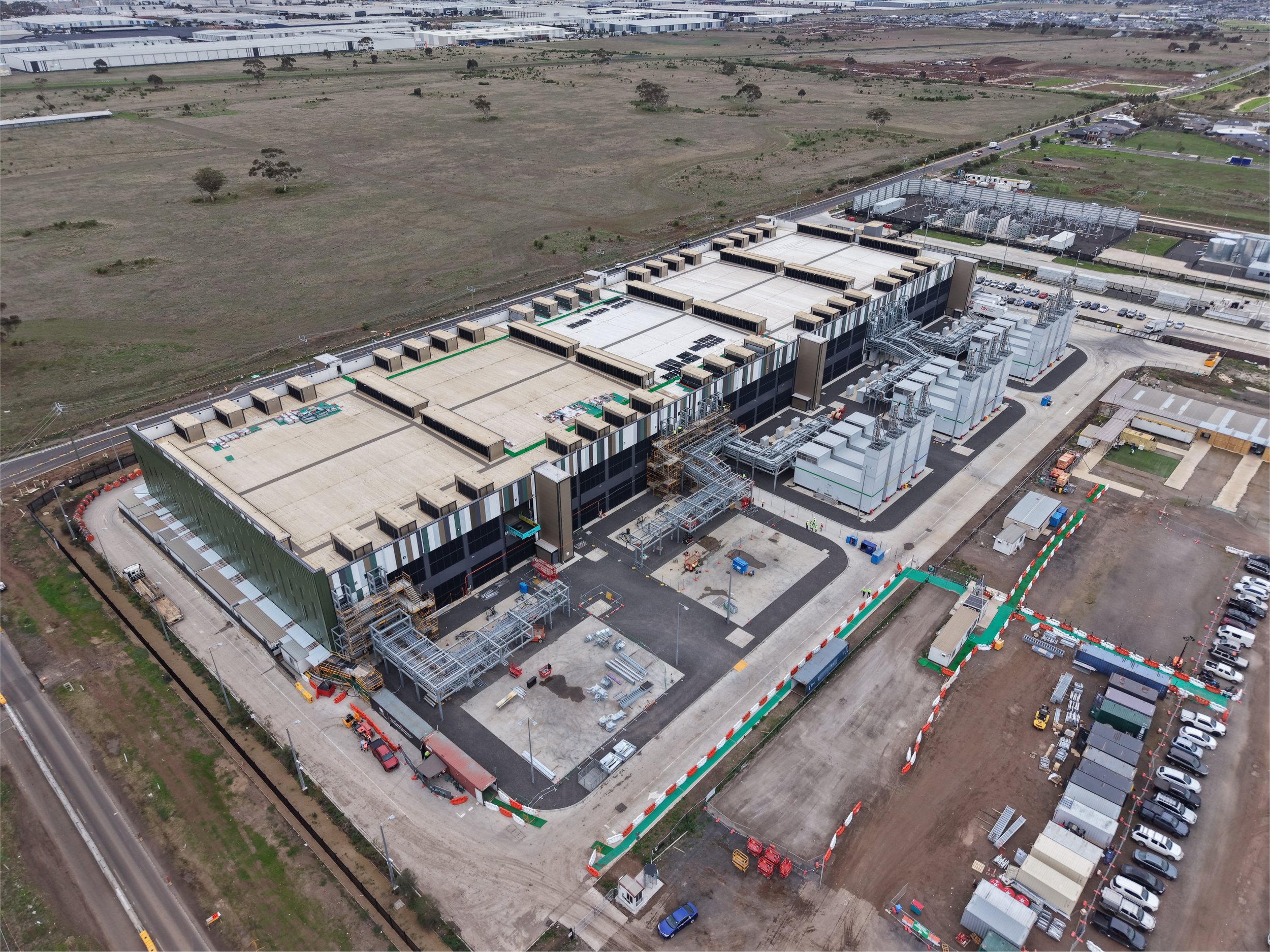
The policy has immediate weight because of the scale already committed. Amazon alone has pledged AU$20 billion to expand its Australian data centre footprint, and industry forecasts put data centre electricity demand rising from roughly 3TWh to 30TWh by 2035. Separately, the Australian Energy Market Commission proposed technical standards in March 2026 requiring large data centres to stay connected to the grid during faults rather than disconnecting — a response to concern that synchronised disconnections at that scale could destabilise the National Electricity Market. Together, the direction is consistent: government now expects operators to account for their full energy footprint, and to do it in a way that doesn't put the grid itself at risk.
Backup power sits inside that footprint, whether the policy names it explicitly or not. Diesel generators are still the default at most sites, and they create exactly the kind of localised noise and air pollution that erodes the social licence this policy is designed to protect. A facility can be a net-generator on paper and still be the thing the neighbouring suburb complains about. That gap is where the compliance conversation is heading next.
Overseas, the response is already visible. Hydrogen fuel cells are moving past pilot status for data centre power — operators are converting years of live operational data into firm, multi-year infrastructure orders rather than one-off trials. The direction of travel is clear: this is no longer a technology-readiness question, it's an integration and delivery question.
For Australia, there's a second layer beyond emissions and noise: sovereign security of supply. Between multi-year grid connection queues and reliance on imported diesel, a domestic hydrogen supply chain answers a question neither of those options can.
"Diesel backup is the familiar option, not necessarily the defensible one," said Roger Knight, Managing Director at Energys. "This mandate means the compliance conversation reaches every part of a data centre's energy footprint — including the part that only switches on a few hours a year."
The technology itself isn't the open question anymore. "What's still being worked out is how you integrate hydrogen backup into a live, mission-critical site without adding risk during construction or commissioning," Knight said. "That's an EPC and safety-case problem as much as it's a technology one — and it's the part of this that actually determines whether a site meets the standard it's now being held to."
That's the practical work ahead of Australian operators: not proving hydrogen backup power works, but integrating it into sites that can't afford downtime, on a timeline the new obligations are already setting.