

PRODUCTION & INFRASTRUCTURE
The feasibility case for one of the world’s largest renewable ammonia facilities
CLIENT
DYNO NOBEL
SECTOR
Industrial decarbonisation
LOCATION
Queensland, Australia
AT A GLANCE
160 MW
ELECTROLYSIS CAPACITY STUDIED
25 yrs
SUPPLY MODELLING HORIZON
45,000 t/yr
AMONIA PLANT FED BY THE FACILITY
2020
STUDY COMPLETED
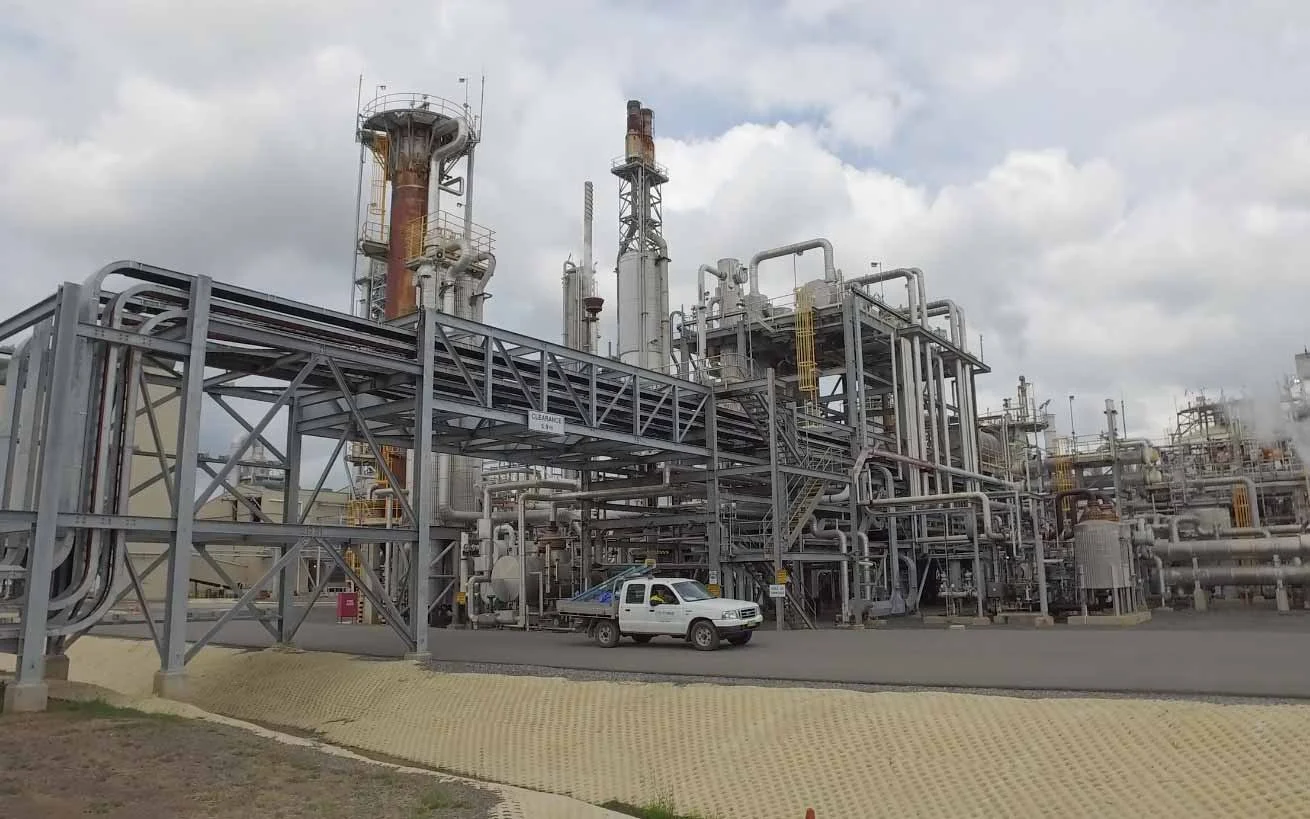
Dyno Nobel’s Moranbah facility in Queensland’s Bowen Basin makes ammonium nitrate for the region’s mines. Growing demand meant more ammonia — and more of it imported to site. Dyno Nobel wanted to know whether that ammonia could instead be made on site from renewable hydrogen, replacing purchased feedstock and cutting emissions at the same time.
With co-funding from the Australian Renewable Energy Agency, Dyno Nobel commissioned Energys (then ANT Energy Solutions) to lead the feasibility study. The question was not whether electrolysis works, but whether it works at this scale: 160 MW of electrolysers powered by a dedicated solar array, with enough storage to keep hydrogen flowing to a continuous chemical process through nights and cloudy days — and whether the numbers stack up over a 25-year operating life.
The engineering challenge: model an industrial-scale renewable hydrogen facility from the solar farm to the ammonia plant, and put a credible, publishable answer on its technical and commercial viability.
THE BRIEF
Find out whether solar-only hydrogen can carry an industrial process
ENERGYS’ SCOPE
What Energys delivered
Energys led and delivered the full feasibility study — renewable generation modelling, hydrogen production and storage design, long-term supply modelling, and assessment of infrastructure, technical integration and commercial viability.
-
Energys modelled a dedicated 240 MW behind-the-meter solar array across 500 hectares assessed at Moranbah, with a supplementary review of wind resource. The selected base case assumed no grid backup — hydrogen supply from solar alone — with grid-connected operation assessed separately as an alternative configuration.
-
The study sized a 160 MW electrolysis facility, modelling both PEM and alkaline technologies, with peak production of approximately 3.5 tonnes of hydrogen per hour. To carry the plant through solar variability, Energys designed 54 tonnes of usable compressed hydrogen buffer storage — 53 tonnes at 250 bar and one tonne at 100 bar in containerised storage — and defined the infrastructure to integrate hydrogen supply with the existing ammonia process.
-
Energys modelled hydrogen supply over a 25-year lifecycle, delivering an average of approximately 24 tonnes per day from solar-only operation, and assessed the technical integration, infrastructure requirements and commercial viability of the facility against Dyno Nobel’s feedstock needs. The completed study was published through ARENA’s knowledge bank as nationally available analysis of large-scale industrial hydrogen deployment.
Published by ARENA
the full study is available on the ARENA knowledge bank
THE CONCEPT FACILITY
Solar-to-Ammonia Renewable Hydrogen Facility
A renewable hydrogen facility concept developed to feed ammonia production at Dyno Nobel’s ammonium nitrate plant in Moranbah, Queensland.
The facility as studied comprises a 160 MW electrolysis plant, modelled for both PEM and alkaline technologies, powered by a dedicated 240 MW behind-the-meter solar array on approximately 500 hectares. Peak hydrogen production is approximately 3.5 tonnes per hour, with 54 tonnes of usable compressed hydrogen buffer storage — 53 tonnes at 250 bar and one tonne at 100 bar in containerised storage — to sustain continuous supply to the process through solar variability. The base case assumes solar-only operation without grid backup; a grid-connected alternative was assessed separately.
Long-term supply modelling delivers an average of approximately 24 tonnes of hydrogen per day over a 25-year operating life, as feedstock for on-site ammonia manufacture in place of imported ammonia.
Feasibility study completed 2020. Published by ARENA, 2021.