

MARINE POWER
Marine fuel cell design taken through class approval in UK waters
CLIENT
GREEN MARINE UK
SECTOR
Crew transfer vessel
LOCATION
United Kingdom
AT A GLANCE
270 kW
HYDROGEN FUEL CELL POWER SYSTEM
up to 40%
VESSEL NOx REDUCTION (PROJECT FINDINGS)
2024
RINA APPROVAL IN PRINCIPLE
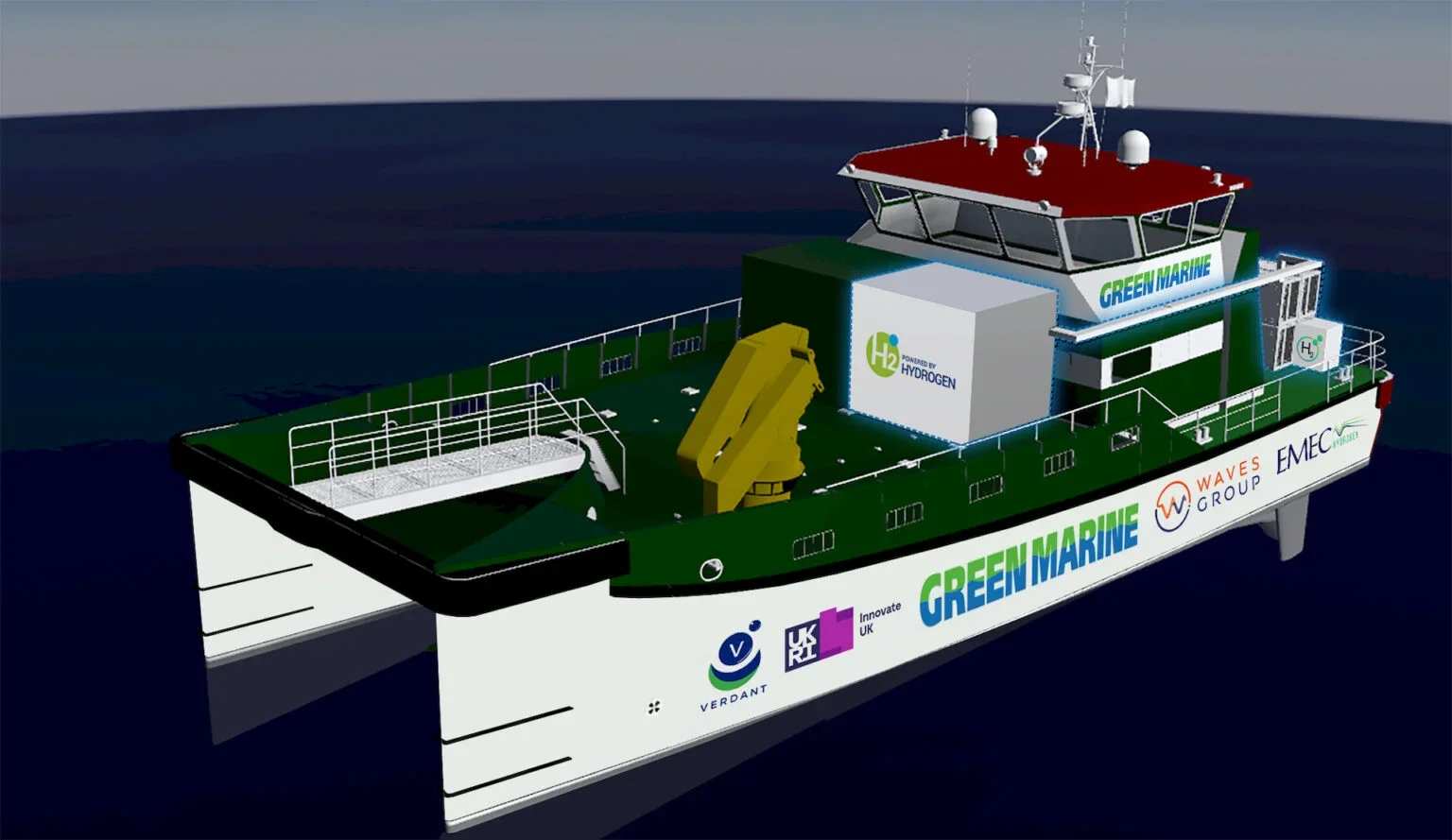
Crew transfer vessels servicing UK offshore wind farms spend long stretches loitering at low speed with their diesel engines running. Green Marine UK’s Project Verdant set out to change that: retrofit its CTVs with hydrogen fuel cells and batteries so the diesels can be shut down for zero-emission operation while on station, cutting CO₂ and NOx without changing how the vessels work.
Funded by Innovate UK, the project brought together Green Marine UK as lead, maritime consultancy Waves Group, the European Marine Energy Centre (EMEC) and Engineered Marine Systems, which designed the battery room. Energys was engaged for the fuel cell system: design, engineering and modelling of a 270 kW hydrogen fuel cell power system driving electric motors alongside the vessel’s existing diesel engines — and the design documentation to support classification review.
The engineering challenge: 270 kW of fuel cell power engineered into an existing vessel, assessed against MCA and RINA rules for hydrogen-fuelled ships.
THE BRIEF
Cut the diesel hours where CTVs spend most of their day
ENERGYS’ SCOPE
What Energys delivered
Energys delivered the fuel cell system design, engineering and modelling for the retrofit, and the design documentation that supported RINA’s Approval in Principle, as one partner in an Innovate UK-funded consortium led by Green Marine UK.
-
Energys designed a 270 kW hydrogen fuel cell power system for the crew transfer vessel retrofit, arranged with electric motors alongside the vessel’s existing diesel engines so that the diesels can be shut down for zero-emission operation at loiter speed. The design drew on Energys’ marine fuel cell generator platform and was developed for integration with the vessel’s hybrid battery system.
-
Energys provided the engineering and system modelling behind the concept, supporting the project’s assessment of the hybrid arrangement against the vessel’s operational profile. The project’s findings indicate the hybrid system could reduce the vessel’s CO₂ emissions by up to 30% and NOx emissions by up to 40%, reflecting the long periods CTVs spend in loiter mode.
-
Energys contributed to the comprehensive package of design documentation and drawings reviewed by RINA. Approval in Principle was issued in July 2024, assessed against the UK Maritime & Coastguard Agency’s MGN 664 and RINA Rules Part C, Chapter 1, Appendix 14 — Hydrogen Fuelled Ships — opening the way to basic design, detailed engineering and sea trials.
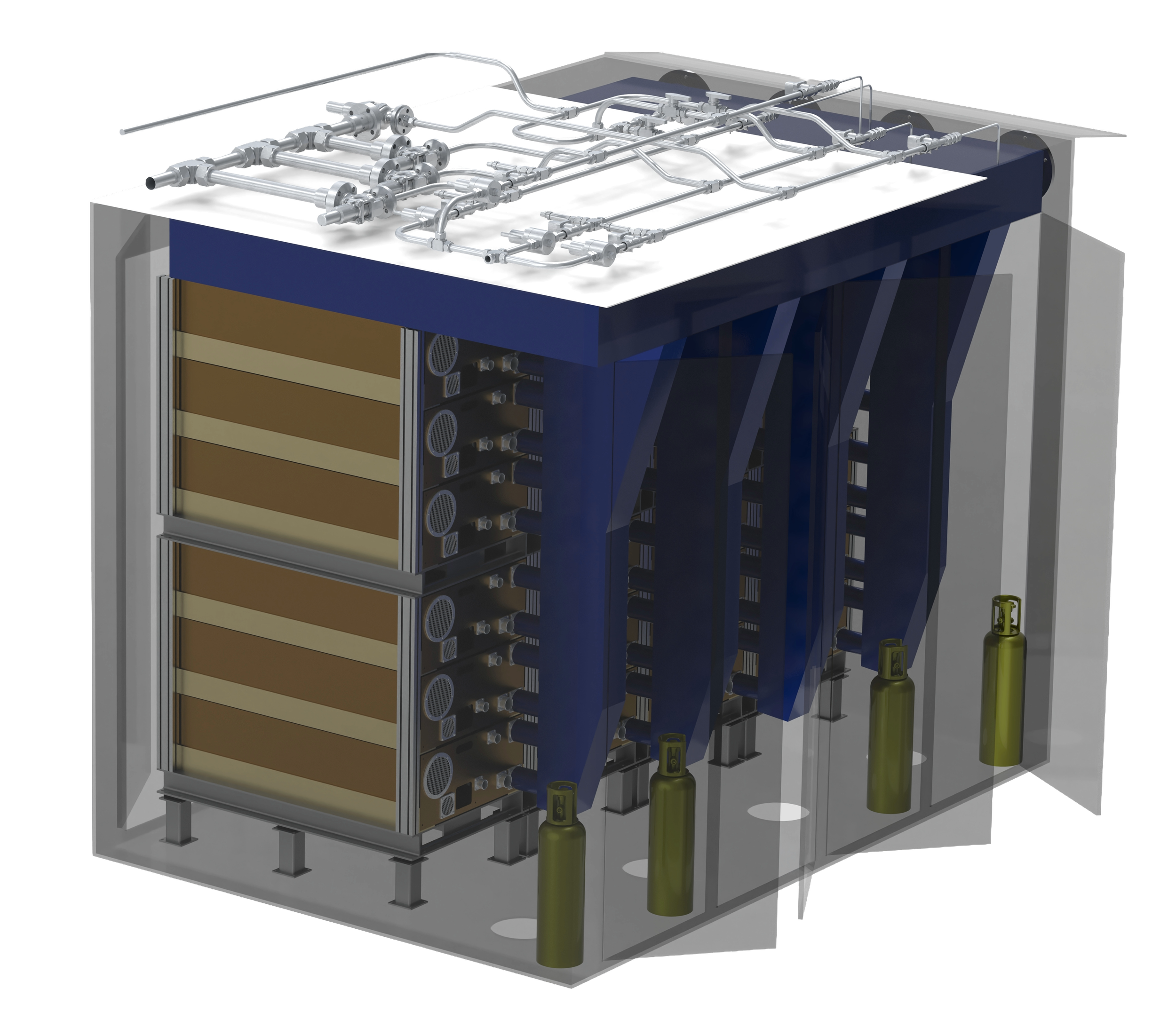
THE SYSTEM AS DESIGNED
270 kW Marine Hydrogen Fuel Cell Power System
A 270 kW hydrogen fuel cell power system designed as part of a hydrogen fuel cell and battery retrofit for crew transfer vessels servicing offshore wind farms in UK waters.
The design places hydrogen fuel cells and electric motors alongside the vessel’s existing diesel engines. At loiter speed — where CTVs spend much of their working day on station — the diesels can be shut down and the vessel run on fuel cell and battery power for zero-emission operation, with the diesel engines retained for transit and redundancy.
Design assessed by RINA against MCA MGN 664 and RINA Rules Part C, Chapter 1, Appendix 14, Hydrogen Fuelled Ships. Approval in Principle issued July 2024.